
Showing posts with label Psychology. Show all posts
Showing posts with label Psychology. Show all posts
Friday, December 19, 2014
Disadvantages Can Improve Your Chance of Success

Friday, December 5, 2014
12 Public Speaking Tips to Become Sturdy Minded
I've done some public speaking recently (twice in two days), which may be a surprise to anyone who's read some of my bleaker posts about this subject in the past. I'm not saying that this is something easy to get over (by no means) or that I'm completely at ease yet myself, but I thought I'd post a few things that have helped me out over the last few days and have made me much more comfortable. It's strange, but right now I'm feeling like I want more practice with it - which is a long way from the days where I would dread the experience from the moment I found out that it was coming until the moment the I was in front of a group.
The more comfortable I get with myself in front of a group, the more I feel as if a weight that I've been carrying half of my life is finally being lifted off of me. I even smiled a few times behind that podium because "It's been a long time coming." How ridiculous that I've let this hinder me for so long. I know that I have a long way to go, but taking these steps of doing and not avoiding (like I used to) has been good for me. I can already tell that the more I do this, the less of a 'big deal' my mind will make out of it. To show you how small I'm starting and how far I have to go - I haven't spoken in front of more than 15 people yet and my comfort level somewhat depends on who is in my small audience. If I know there's a rude or judgmental person there, I'm a little more anxious (which is something I've got to get past). Why let one or two people ruin progress? I've noticed from watching any public speaking, that there are people in the audience that will be judgmental no matter who is up in front of them. These are usually the people that would hate to be up there themselves.
Below is what has helped me and I didn't learn all of this on my own so I'm going to give credit where credit is due...
1. If possible, start speaking in front of 10 to 15 people. Where it's work related you can start by just reading and going over the facts without getting too much into personal stories etc. As you get comfortable that will come later.
2. I know this goes against what all of the public speaking "experts" teach but don't be afraid to make a joke out of your nervousness. The "experts" say you don't want to draw attention to it but if you think they will notice anyway, take the pressure off yourself by being real. They will usually laugh at this if it's done in a certain way. There is usually no reason,while public speaking, to make everything so serious. The more self-effacing and friendly you are, the more likely you'll get warm feelings back towards you. If someone in the audience is jerky enough to take advantage of that; you have the podium (so to speak), so you can shut them down (if even sarcastically).
3. Remember half of your audience isn't listening to you and the other half just hopes you don't call on them.
4. Smile - Smiling changes the brain. When you grin (even a small sly grin) it eases the tension. At least it has been working for me. You don't have to stand up there grinning like the Cheshire cat but every now and then helps the brain snap into a better mood and sense of well-being.
5 Breathing - this has been a biggie for me. I did not realize how much effective breathing can ease the tensions in my body. Here are the breathing videos I recommend (note it is a playlist - I suggest all videos be watched at one point)...
6. Realize that some things just can't be fixed with your head. Whether you're reading book after book on the subject but never putting it into practice, or you're backstage trying to think about how special you are because you read it in one of those books - there are some things you can't think yourself out of. Sometimes the best way to fix your head is to get out of your head - see the videos below for better explanations (note it is a playlist - I suggest all videos be watched)...
7. If needed, get with your doctor or psychiatrist about prescriptions that will help with the nerves while you practice and get better at public speaking. If permitted by a physician, perhaps you can taper down the amount taken as you get more comfortable being in front of an audience - up to the point where you no longer find the medication necessary because your brain has rewired itself to see public speaking as something that isn't life threatening or as big of a deal as you once made it. The typical medications a doctor might prescribe would be Xanax or beta-blockers. Of course, it'd be great not to have to use them at all but it depends on how extreme the fear is. If it's to the point where you'd rather drive off into the distance, lose your job, and leave your family behind because your company wants you to give 20 minute speech, then perhaps your psychiatrist can give you something to help you get over that hump. While feeling the fear isn't a bad thing, there's no reason you have to suffer more than the average person does before they do public speaking. Even pets are given sedatives during thunderstorms.
8. When you can, use a podium. I love podiums. You can sort your paperwork out on them, hide those shaky hands you usually get at first. Lean on it for a rest when you want (but they will think you're doing it for effect). Use one when possible. Politicians have it made, besides debates they have a podium and teleprompters to read off of.
9. Don't over-prep. Over-preparing can make you more nervous (it does me). Have some bullet points you'd like to hit and go from there. You don't have to memorize a speech or practice it over and over. That's overkill and it makes being in front of other people as different than other parts of your life. Do you have to practice what you're going to say to your buddy or family members over and over before you talk to them? I know you want to be a little more prepared when you have a message that has to be relayed to a group of people but I'm done with over-prepping and the 'practicing in the mirror' bit.
10. Remember it's not about you, the world doesn't revolve around you. They don't care as much as you think they do. You're actually up there just having a conversation with fellow human beings.
11. Change your Diet for the better - I will get more into this later but I've cut way back on dairy and carbs and I'm feeling a lot calmer. Also, the better shape you're in, the better you'll probably feel in front of a group. Especially if you haven't nailed down that "I don't give a crap what they think" part yet.
12. Last trick I have that is still taking me some time to get a complete grip on - The more you don't care if you appear nervous or that people will notice your blushing, shaky hands, shaky voice etc. - the less nervous you will be. As a result of not caring if they notice, the symptoms are eliminated :). This probably goes hand in hand with #2 on this list. The less you care what others think, the better off you'll be.
"The greatest prison people live in, is the fear of what other people think."
The more comfortable I get with myself in front of a group, the more I feel as if a weight that I've been carrying half of my life is finally being lifted off of me. I even smiled a few times behind that podium because "It's been a long time coming." How ridiculous that I've let this hinder me for so long. I know that I have a long way to go, but taking these steps of doing and not avoiding (like I used to) has been good for me. I can already tell that the more I do this, the less of a 'big deal' my mind will make out of it. To show you how small I'm starting and how far I have to go - I haven't spoken in front of more than 15 people yet and my comfort level somewhat depends on who is in my small audience. If I know there's a rude or judgmental person there, I'm a little more anxious (which is something I've got to get past). Why let one or two people ruin progress? I've noticed from watching any public speaking, that there are people in the audience that will be judgmental no matter who is up in front of them. These are usually the people that would hate to be up there themselves.
Below is what has helped me and I didn't learn all of this on my own so I'm going to give credit where credit is due...
1. If possible, start speaking in front of 10 to 15 people. Where it's work related you can start by just reading and going over the facts without getting too much into personal stories etc. As you get comfortable that will come later.
2. I know this goes against what all of the public speaking "experts" teach but don't be afraid to make a joke out of your nervousness. The "experts" say you don't want to draw attention to it but if you think they will notice anyway, take the pressure off yourself by being real. They will usually laugh at this if it's done in a certain way. There is usually no reason,while public speaking, to make everything so serious. The more self-effacing and friendly you are, the more likely you'll get warm feelings back towards you. If someone in the audience is jerky enough to take advantage of that; you have the podium (so to speak), so you can shut them down (if even sarcastically).
3. Remember half of your audience isn't listening to you and the other half just hopes you don't call on them.
4. Smile - Smiling changes the brain. When you grin (even a small sly grin) it eases the tension. At least it has been working for me. You don't have to stand up there grinning like the Cheshire cat but every now and then helps the brain snap into a better mood and sense of well-being.
5 Breathing - this has been a biggie for me. I did not realize how much effective breathing can ease the tensions in my body. Here are the breathing videos I recommend (note it is a playlist - I suggest all videos be watched at one point)...
6. Realize that some things just can't be fixed with your head. Whether you're reading book after book on the subject but never putting it into practice, or you're backstage trying to think about how special you are because you read it in one of those books - there are some things you can't think yourself out of. Sometimes the best way to fix your head is to get out of your head - see the videos below for better explanations (note it is a playlist - I suggest all videos be watched)...
7. If needed, get with your doctor or psychiatrist about prescriptions that will help with the nerves while you practice and get better at public speaking. If permitted by a physician, perhaps you can taper down the amount taken as you get more comfortable being in front of an audience - up to the point where you no longer find the medication necessary because your brain has rewired itself to see public speaking as something that isn't life threatening or as big of a deal as you once made it. The typical medications a doctor might prescribe would be Xanax or beta-blockers. Of course, it'd be great not to have to use them at all but it depends on how extreme the fear is. If it's to the point where you'd rather drive off into the distance, lose your job, and leave your family behind because your company wants you to give 20 minute speech, then perhaps your psychiatrist can give you something to help you get over that hump. While feeling the fear isn't a bad thing, there's no reason you have to suffer more than the average person does before they do public speaking. Even pets are given sedatives during thunderstorms.
8. When you can, use a podium. I love podiums. You can sort your paperwork out on them, hide those shaky hands you usually get at first. Lean on it for a rest when you want (but they will think you're doing it for effect). Use one when possible. Politicians have it made, besides debates they have a podium and teleprompters to read off of.
9. Don't over-prep. Over-preparing can make you more nervous (it does me). Have some bullet points you'd like to hit and go from there. You don't have to memorize a speech or practice it over and over. That's overkill and it makes being in front of other people as different than other parts of your life. Do you have to practice what you're going to say to your buddy or family members over and over before you talk to them? I know you want to be a little more prepared when you have a message that has to be relayed to a group of people but I'm done with over-prepping and the 'practicing in the mirror' bit.
11. Change your Diet for the better - I will get more into this later but I've cut way back on dairy and carbs and I'm feeling a lot calmer. Also, the better shape you're in, the better you'll probably feel in front of a group. Especially if you haven't nailed down that "I don't give a crap what they think" part yet.
12. Last trick I have that is still taking me some time to get a complete grip on - The more you don't care if you appear nervous or that people will notice your blushing, shaky hands, shaky voice etc. - the less nervous you will be. As a result of not caring if they notice, the symptoms are eliminated :). This probably goes hand in hand with #2 on this list. The less you care what others think, the better off you'll be.
"The greatest prison people live in, is the fear of what other people think."
Tuesday, December 2, 2014
You're Angry Because of How You Feel About Yourself

There is a righteous anger when we see or hear about someone who has abused a person or an animal. This anger is in us because it goes against what we have grown into as a civilized society. It goes against a proper mindset in which we protect our weak and innocent. When someone goes beyond the boundaries of what is acceptable, steps must be taken, sometimes steps that result in violence if someone is in immediate danger. We must be a society where men protect the women they see being mugged on our city streets, we must shut down the sexual predators that loom in the darkness, we must be a society that removes the whip from the hands of the sadistic as well as the power from those who wish to take away your basic rights. This is when anger is righteous. Sometimes, if you're not angry, you're asleep.
Going back to the inner struggle that we face when confronted with the less pleasant people or situations; the ones that might cause an unrighteous anger. If we are completely in control of our own minds and thoughts, and we don't like the feeling of being angry or its aftermath, then why in such petty situations (where the anger is not righteous) do we let it erupt in us like a certain green comic book character? I say petty, because most of what we get upset about (in the long run) is quite petty. If they were monumental problems and decisions, then I would know about your problems or you'd know about mine because it would effect more than just a small group (if not just yourself). Not all inconveniences that make us angry are petty, but more than we'd like to admit are.
When someone, say your boss, ask you why you haven't completed a project yet - is it the question that is bad or the way the we let the question make us feel? Of course, it depends on the tone and the attitude in which the question was asked but we still have the control over our own brains. To paraphrase Tim Keller - "It's not your feelings that are hurt, it is your ego." When your pride is pricked or your ego is hurt, the emotional response is usually anger, sadness, or a mix of both. At first, it may even be a feeling of fear as in - "Oh no, I forgot about that report," but it can turn to anger quickly when your mind responds with - "I've been working on that as fast as I can," or "He/she has no idea how much I have on my plate, no wonder I forgot." So, that initial touch of shame or fear goes to anger, and the anger is now focused on the one who said the thing that hurt us.
You can tell your boss why you're behind on a project and he might understand, but if he continues down the path that hurts your ego, the more your anger will grow and the more likely you will be to retaliate. The key here is to stop and take some deep breaths. I've noticed that when I'm stressed, this is usually the first thing to go. My breathing immediately gets shallow when faced with any type of stress but when I focus on my breathing it calms me tremendously and takes me back to less of a reactionary state and more of a constructive and forgiving state.
Another thing that I try to remember, because it usually comes out in the conversation eventually, is that your boss is a human just like you are. In other words, if your ego being hurt or feeling down on yourself can cause you to become angry then if he or she is angry, aren't they coming from a similar place of fear or uncertainty about themselves? Every boss has a boss in some way or another, even if that boss if the financial stability that they've grown to worship. If the financial stability or excess is threatened, then they take these little hits to their pride and ego which in turn makes them a little down on themselves, which causes them to be occasionally angry when they feel that you or another employee has threatened it. Let's also be clear that nine times out of ten it isn't personal. It doesn't matter who the person is that has hurt their ego or who the person is that hurt your ego (either directly or indirectly), that will be the person that the anger is directed towards. You're not angry at them because of the way they look, you're angry because your ego was hurt and you're feeling down on yourself, perhaps because of some past emotional baggage.
Monday, December 1, 2014
50 Shades of Manipulation
I haven't read the book, but I find it very strange that we are currently celebrating the best-selling novel and soon to be movie "50 Shades of Grey" which contains violent sex, while at the same time we have football players saying 'no more' when it comes to violence against women. I'm assuming it is consensual in the book, but considering the mindset of the modern male and the growing number of them already in the hooks of porn addiction, should we really add something to our culture that makes this type of behavior not just acceptable, but fashionable? Having millions of women anxiously awaiting the premier of a movie about a handsome millionaire who's into violent sex might send the wrong message to that weird accountant who has a girlfriend who's too afraid to tell him 'no' when he talks about doing what they saw in the movie or read in the book. So, we have what appears to be consensual sex, but in her mind it isn't consensual at all. He's used the popularity of "50 Shades..." to make her feel as if it isn't that big of a deal. Sorry, but raising a daughter in a culture where so many men see women as objects is scary enough without women, themselves, making this "acceptable" in some way.
On the other hand, it usually doesn't work both ways. Remember all of the women in their 40's being Team Jacob or Team Edward during the Twilight craze? I doubt that would have worked with a bunch of forty-year-old men holding signs outside of movie theaters proclaiming their love of one teenage girl over another.

Still, are we not to think that the popularity of "50 Shades" is going to make some very strange men think - "if they like the book so much, then they must like the content"? In other words, these sickos will think that violent sex is now ok because it has made it to the mainstream and the main character Christian Grey is cool...right? I'm not saying it will cause an increase in rape, but perhaps there will be men out there who will think this is acceptable to all women just because they made a book popular? Please let me know if I'm speaking out of turn here. Being a guy I've never read the book, so for all I know he turns out to be the bad guy in the end. It just seems like male lead is being glorified for his perversions (from what I've seen so far). Sadomasochism isn't necessarily anger as much as it is fetishistic behavior, but there are some angry people out there that can use it as an outlet for their rage. Just to reiterate, my fear is that it will be expected - just like so many men now expect their girlfriends and wives to act like unnatural porn stars in the bedroom.
On the other hand, it usually doesn't work both ways. Remember all of the women in their 40's being Team Jacob or Team Edward during the Twilight craze? I doubt that would have worked with a bunch of forty-year-old men holding signs outside of movie theaters proclaiming their love of one teenage girl over another.

Still, are we not to think that the popularity of "50 Shades" is going to make some very strange men think - "if they like the book so much, then they must like the content"? In other words, these sickos will think that violent sex is now ok because it has made it to the mainstream and the main character Christian Grey is cool...right? I'm not saying it will cause an increase in rape, but perhaps there will be men out there who will think this is acceptable to all women just because they made a book popular? Please let me know if I'm speaking out of turn here. Being a guy I've never read the book, so for all I know he turns out to be the bad guy in the end. It just seems like male lead is being glorified for his perversions (from what I've seen so far). Sadomasochism isn't necessarily anger as much as it is fetishistic behavior, but there are some angry people out there that can use it as an outlet for their rage. Just to reiterate, my fear is that it will be expected - just like so many men now expect their girlfriends and wives to act like unnatural porn stars in the bedroom.
Wednesday, November 19, 2014
Invoking the Power of Your NO
Some of us are very reluctant to use our No. I've brought this up in earlier post stating that apologizing when saying "no" to an unreasonable request is unreasonable and in this post where I bring up the fact that we let ourselves be manipulated, in part, due to our inability to say "no". Can this whole no thing be taken to the extreme? Of course it can. When you're hired to do a job it would be ridiculous to say, the day after you're hired, that you refuse to do it simply because you're not in the mood. The no should come more often than you think though. It should come when you are put in a spot that you inherently know what you should do, but someone else insist otherwise, or tries to convince you that they know better. This goes back to the quote in Fincher's "The Girl With The Dragon Tattoo " -
" -
" -"It's hard to believe that fear of offending me is stronger than the fear of pain, but you know what? It is."I've been thinking about our reluctance to tell others "no" even when it's beneficial for us to do so and even when it would be destructive for us not to say it. It started when I listened to this podcast where Lewis Howes interviews the author of The Power of No's James Altucher. If you're not familiar with this subject, this podcast is a good place to start. I also have watched the video below a few times and some excellent points are made on how "no" is a part of life's journey if you are to grow.
The metamorphosis that Elliott Hulse is talking about here as far as Friedrich Nietzsche is concerned is best summed up here. I'm not a fan of Nietzsche but I can see where Elliott is coming from making the comparisons in this video. In the story "Thus Spoke Zarathustra" by Nietzche, he claims that "God is dead." This is because he believes in order to become the Ubermensche, one must get rid of the "Thou Shalts" and this beast of burden thinking.
I know that in the case of Nietzsche, he's talking of an oppressive religious system. Jesus himself was against the repressive religious system of the Pharisees. Bringing wrongful ways of thinking down does not, however, mean that God is dead. If you really want freedom out from under a 'thou shalt' or a boss then Christianity would be the most reasonable track. In order to say no to the world and slay the dragon you have to remember who the dragon is and remember that no matter how powerful you think you are, you will still worship something.
When Nietzsche says that we are to become like children again with a new yes, he's talking of a natural cycle that happens on a more personal level in people's lives, whether they believe in a God or not. The older you get, the more likely you are able to see through people's bull and give out more NO's then yeses, the wiser you get the more likely you are to accept that you don't know everything but you're willing to recreate yourself with new knowledge that you, yourself have tested instead of simply accepting what's been passed down to you.
Related Books:
The Power of No: Because One Little Word Can Bring Health, Abundance, and Happiness

Pulling Your Own Strings

Boundaries: When to Say Yes, How to Say No to Take Control of Your Life

Your Dad Was a Nervous Nelly
The other day I had someone that knew my dad tell me (jokingly), "Your dad was a nervous Nelly." It was funny because it was true. Strange thing is, I never would've thought anyone else noticed if he hadn't brought it up. Don't get me wrong - he's stronger than me in some ways. He spoke in front of large groups easily all his life and he was skilled in the martial arts when he was younger. He still has some self-esteem issues with caring about what others think a little too much, but that seems to be the way of the world now.
He mainly worries about the kind of stuff that we have no control over. The kind of stuff that could happen to anyone at anytime - like losing a job, getting sick, or someone in his family being in a car accident. Just because these are all possibilities doesn't mean that if you worry about them that they will not happen. He had the tendency to avoid confrontation due to worrying about upsetting someone, but then would sometimes explode over the smallest things.

He worries about stuff that most of us don't even think about. Perhaps it's the police background but it borders on ridiculous - "You kill those weeds with gas and what happens if someone throws their cigarette there?" The question makes some since but the odds of that happening in a time period where it would be flammable enough to burn my house down would be comical. And who is this strange smoking man standing a foot away from my house while I'm not there? Don't get me wrong, I don't make a habit out of killing grass with gasoline. This was on a patch of grass because I'd run out of Roundup. His mother, my grandmother, was even worse - so I can see where he got the worrying from. And now one of my daughters (who has the same type of worries as my father) - so, 4 generations of anxiety in a 50 year span. Thanks genetics.
He mainly worries about the kind of stuff that we have no control over. The kind of stuff that could happen to anyone at anytime - like losing a job, getting sick, or someone in his family being in a car accident. Just because these are all possibilities doesn't mean that if you worry about them that they will not happen. He had the tendency to avoid confrontation due to worrying about upsetting someone, but then would sometimes explode over the smallest things.
He worries about stuff that most of us don't even think about. Perhaps it's the police background but it borders on ridiculous - "You kill those weeds with gas and what happens if someone throws their cigarette there?" The question makes some since but the odds of that happening in a time period where it would be flammable enough to burn my house down would be comical. And who is this strange smoking man standing a foot away from my house while I'm not there? Don't get me wrong, I don't make a habit out of killing grass with gasoline. This was on a patch of grass because I'd run out of Roundup. His mother, my grandmother, was even worse - so I can see where he got the worrying from. And now one of my daughters (who has the same type of worries as my father) - so, 4 generations of anxiety in a 50 year span. Thanks genetics.
Friday, October 31, 2014
Public Speaking and OCD
I'm thinking that my aversion to public speaking has something to do with making a big deal out of every little mistake I make and every little thing that people do in my audience (no matter how large or small). I have some meetings today where I'm sharing the lead role as presenter with another co-worker and so far, so good. I think starting small is a good thing. Start with a small group, get comfortable speaking in front of them and go from there. If you must, like I did, you can even start from scratch - be the one who volunteers to read a paragraph out loud etc. Someone who is a perfectionist tends to put their self-worth on how good they are seen by others. If a speaking engagement goes badly then I must be a weak and horrible person who has no place in society? Where did I get that? Maybe it's from holding on to crap that happened in school at those moments when big deals were made out of truly petty situations.
Breathing and attitude has a lot to do with how your presentation will go also. If you are making it into something besides communicating with other humans (in essence, holding a conversation with several people instead on one person) then you can overthink it. You can make it to where you feel as if you mispronounce a word, or have a moment where you can't think of the right word - instead of laughing it off, you turn it into a big deal and start the negative self talk which does you no good. I've been down that dead end road too many times.
I've had some cases where I can see someone leaning in to talk to the person next to them and I assume they are talking about me whether they are or not. Actually, it should make no difference but it still registers. I've even have had a few, that after they hear what this whisperer is saying to them, actual laugh out loud. Loud enough for everyone to hear (like it was just soooo funny). I think I'm going to start calling these people out like they are in the second grade and ask them if they have anything they'd like to share because it is very childish. Usually, these loud mouths aren't so brave when they are put on the spot. It's usually because of their on self-consciousness and feelings of insecurity that they do this kind of stuff. They want to draw this limited amount of attention to themselves (look at me, I'm cool and better), but not so much attention that the tables could turn on them. Maybe everyone else can see right through them anyway and I should just let them make fools of themselves. Maybe it's OCD and wanting everything to go perfect that causes this to be a bigger deal than it should. If you don't care, then maybe they can tell you don't care and it makes them feel even dumber than if you were to call them out on it. You see? That's why it's good to write and keep a journal - so you can work this kind of stuff out.
Being the leader you can control the relaxedness or tenseness of the environment. So if you decide that an open conversation with someone in the audience will calm yourself and show the audience some naturalness then you might start with that. You might bring so food and drinks for them to snack on (and make noise with) to take all of the focus off of yourself. I'm really thankful right now that I'm in a position where things can be taking slowly instead of having my boss tell me that I will be speaking at a convention next week with a thousand people. I know that I've written about this before and that I can be pretty dramatic but today (for some reason) the drama has lessened and I'm seeing more people that are like me, would rather avoid speaking in public if they have to, but are adult about listening to what I have to say without judgement. Maybe I've been around the wrong people for too long? People that see someone is uncomfortable and take advantage of that situation to make themselves feel better are people that I've dealt with before but (like I've said before) the less I care about trying to be perfect or not show any signs of nervousness while public speaking then the less I will have these traits when I've the center of attention. It's similar to that Aurelius quote I've worn out - "reject your sense of injury and the injury itself disappears."
Of note:
This little trick has worked pretty well for me before public speaking...
Rikk Wilde - look him up on YouTube if the link is already taken down. I wouldn't say to watch this for laughs like some jerks do, but to read the comments. You will see that you are not alone in this whole public speaking thing. The poor guy has millions of hits on YouTube but people are really defending him because they know how he feels. There is an empathy there that you don't get with a lot of other subjects. There is a reason this video is out there and I don't think it's because people are enjoying watching someone suffer.
Breathing and attitude has a lot to do with how your presentation will go also. If you are making it into something besides communicating with other humans (in essence, holding a conversation with several people instead on one person) then you can overthink it. You can make it to where you feel as if you mispronounce a word, or have a moment where you can't think of the right word - instead of laughing it off, you turn it into a big deal and start the negative self talk which does you no good. I've been down that dead end road too many times.
I've had some cases where I can see someone leaning in to talk to the person next to them and I assume they are talking about me whether they are or not. Actually, it should make no difference but it still registers. I've even have had a few, that after they hear what this whisperer is saying to them, actual laugh out loud. Loud enough for everyone to hear (like it was just soooo funny). I think I'm going to start calling these people out like they are in the second grade and ask them if they have anything they'd like to share because it is very childish. Usually, these loud mouths aren't so brave when they are put on the spot. It's usually because of their on self-consciousness and feelings of insecurity that they do this kind of stuff. They want to draw this limited amount of attention to themselves (look at me, I'm cool and better), but not so much attention that the tables could turn on them. Maybe everyone else can see right through them anyway and I should just let them make fools of themselves. Maybe it's OCD and wanting everything to go perfect that causes this to be a bigger deal than it should. If you don't care, then maybe they can tell you don't care and it makes them feel even dumber than if you were to call them out on it. You see? That's why it's good to write and keep a journal - so you can work this kind of stuff out.
Being the leader you can control the relaxedness or tenseness of the environment. So if you decide that an open conversation with someone in the audience will calm yourself and show the audience some naturalness then you might start with that. You might bring so food and drinks for them to snack on (and make noise with) to take all of the focus off of yourself. I'm really thankful right now that I'm in a position where things can be taking slowly instead of having my boss tell me that I will be speaking at a convention next week with a thousand people. I know that I've written about this before and that I can be pretty dramatic but today (for some reason) the drama has lessened and I'm seeing more people that are like me, would rather avoid speaking in public if they have to, but are adult about listening to what I have to say without judgement. Maybe I've been around the wrong people for too long? People that see someone is uncomfortable and take advantage of that situation to make themselves feel better are people that I've dealt with before but (like I've said before) the less I care about trying to be perfect or not show any signs of nervousness while public speaking then the less I will have these traits when I've the center of attention. It's similar to that Aurelius quote I've worn out - "reject your sense of injury and the injury itself disappears."
Of note:
This little trick has worked pretty well for me before public speaking...
Rikk Wilde - look him up on YouTube if the link is already taken down. I wouldn't say to watch this for laughs like some jerks do, but to read the comments. You will see that you are not alone in this whole public speaking thing. The poor guy has millions of hits on YouTube but people are really defending him because they know how he feels. There is an empathy there that you don't get with a lot of other subjects. There is a reason this video is out there and I don't think it's because people are enjoying watching someone suffer.
Friday, October 24, 2014
Nicotine Withdrawal - Day 12

Really, my cravings are becoming less frequent. There are certain things that seem to set off the need for tobacco that I've discussed before. I could have used a huge cigar at the end of the Saints' game last weekend. If they could win a game then my Sundays would be a little more sunshine and less the Morrissey version of "silent and grey." I'm not much of a Sunday person anyway, so the Saint's losing the game in the last 3 minutes only made it more depressing. Why I'm upset because some millionaires lost a game is beyond me.
I still get that flush of dopamine every now and again when I think about smoking. They say it gets released when you're expecting a reward, whether the reward actually comes or not. Problem is, I'm unable to fulfill the expectation so I look to other things like food and drink. My time on the treadmill has gone up a little (probably due to the need to burn off some stress) but I'm sure I'm making up for it in calories. I had two beers last night, plus a lot of appetizers at the restaurant we went to. No real food that I can think of in the last few days. That will have to be the next step once I'm over this hump - getting my diet back on track. If I don't reign this in I will end up on the news, being fork-lifted out of my house while my moo moo flaps in the wind.
.gif)
I've learned that knowing something is bad for you doesn't mean that you will make a change. The thoughts about something being bad for you have to align with your emotions in order for you to quit a bad habit or start a good one. That's why most of the time, when life changes are made, it's because of an emotion like fear. You're much more likely to have a clean diet if your doctor tells you that you're borderline diabetic and you're more apt to quit smoking if you're told that you have spots on your lungs. Sad but true. Maybe I'm lucky that it didn't take a scare to make me quit nicotine? There was some other emotion that lined up with the intellectual part of me knowing it was bad for me, even though I can't really put my finger on it I'm sure a small part of it was fear. Next step will be to get my diet back under control instead of using quitting smoking as the excuse. Guess it will take lining the intellectual and the emotional up again. Now back to listening to Viva Hate because what's a better answer to any problem than knowing it's all going to end one way or another - "Armageddon, come Armageddon."
Thursday, October 23, 2014
Corporate Assertiveness
It's just strange when you work with (mostly) overly assertive "alpha male" types in your small group and an email with the attachment below is sent out to all 13 of us. I'm with a group of about 13 corporate, middle and top, managers in our general area and I'm probably the most laid-back, humble, and stoic out of the group. I'm not lazy, but sometimes I'm (let's say) unmoved by the things that most corporate types get all excited about. Also, the fact that I don't have to be the center of attention makes me an anomaly in their world. Maybe this is some kind of training that is supposed to "help" me but the training manager thought I'd feel singled out if he just sent it to me? Or...maybe I think the world revolves around me and the email has nothing to do with me? I'm just finding it hard to believe that any of them would mark yes to any of these statements, but I've been wrong many times before.
I'd like to reply back - "Thanks, this was great info! I will make sure to put it on my Palm Pilot." Corporate psychology is at least 20 years behind from what I've experienced. The same guys who were in management in the 80's and 90's are still spreading all of their little tricks and sayings that they learned back then, not realizing that a lot of their data has turned out to be incorrect. I'm not talking about the Zig Ziglar motivational stuff they love; I'm talking about the self-esteem boosting agenda that they think will solve all of their problems when it's probably the cause of most problems in corporate America.
Believe me, I've tested this self-esteem thing out on people who claim to be full of it. You give one of these guys a compliment and their chest pokes out a little; you tell them that someone "higher up" or "important" bragged on them and you will see them glow. At a past job, when I told another manager what the VP had said about him, he literally teared up. If they are so sure of themselves then why do these little comments make them feel so good?

If I try to stay out of toxic conversations with those who seem to thrive on toxic and narcissistic talk, does it mean that I'm avoiding them out of fear and that I lack assertiveness? No, it means that I would rather avoid the bad vibes, the headache, and the needless drama. Isn't it normal to want to save your energy for something more useful? If they have something to say to me directly then that's when I'll decide how much time and energy to spend on them in order to keep them at bay or to play the game in a way that is beneficial. Other than that, unless their attitudes change for the better, they are simply annoyances in the background - like a fly buzzing around the room.
Self-esteem is still a big deal (what is believed to be a necessary thing) in the corporate world. No matter how much research has been done to prove that self-esteem isn't this grand goal, they just keep pushing it. The corporate world would be a much better environment if they realized the problem is that there is too much self-esteem and not enough self-forgetfulness, but it doesn't make sense in a culture where having more of something is usually a good thing. That is also why it's open season on the guys or gals who don't completely fit this corporate mold. If you've seen American Psycho, you'll remember it got to the point where they got each other's names confused they were so much alike.
Some of the information below can be valid such as, "I apologize when I say no even when it is in response to unreasonable request." That is something that you'd want to avoid, along with most things on this list. You don't want to let people walk all over you but you don't want to overthink it either. Part of the email that came with this attachment said something about hesitating while talking, talking too loud, talking to soft, the tone you use....It's enough to make you self-conscious about every word that comes out of your mouth if you weren't already. If you don't care if people notice your soft tone, shaky voice, or hesitation then those things fade away but focusing so much on this stuff can make it worse.
For example, if I really thought about number 16 below and took it seriously I'd be jumping to introduce myself with my hand out at every turn because I wouldn't want anyone to think I need someone else to introduce me because 'how weak is that?' I have no problem introducing myself to someone, or introducing other people to strangers, or someone introducing themselves to me first...whatever. I really don't think it's worth putting on a list that is labelled "How Assertive Are You?" If we have to make list with this kind of stuff on it, then we're not confident and very petty. So much for high self-esteem.

I'd like to reply back - "Thanks, this was great info! I will make sure to put it on my Palm Pilot." Corporate psychology is at least 20 years behind from what I've experienced. The same guys who were in management in the 80's and 90's are still spreading all of their little tricks and sayings that they learned back then, not realizing that a lot of their data has turned out to be incorrect. I'm not talking about the Zig Ziglar motivational stuff they love; I'm talking about the self-esteem boosting agenda that they think will solve all of their problems when it's probably the cause of most problems in corporate America.
Believe me, I've tested this self-esteem thing out on people who claim to be full of it. You give one of these guys a compliment and their chest pokes out a little; you tell them that someone "higher up" or "important" bragged on them and you will see them glow. At a past job, when I told another manager what the VP had said about him, he literally teared up. If they are so sure of themselves then why do these little comments make them feel so good?

If I try to stay out of toxic conversations with those who seem to thrive on toxic and narcissistic talk, does it mean that I'm avoiding them out of fear and that I lack assertiveness? No, it means that I would rather avoid the bad vibes, the headache, and the needless drama. Isn't it normal to want to save your energy for something more useful? If they have something to say to me directly then that's when I'll decide how much time and energy to spend on them in order to keep them at bay or to play the game in a way that is beneficial. Other than that, unless their attitudes change for the better, they are simply annoyances in the background - like a fly buzzing around the room.
Self-esteem is still a big deal (what is believed to be a necessary thing) in the corporate world. No matter how much research has been done to prove that self-esteem isn't this grand goal, they just keep pushing it. The corporate world would be a much better environment if they realized the problem is that there is too much self-esteem and not enough self-forgetfulness, but it doesn't make sense in a culture where having more of something is usually a good thing. That is also why it's open season on the guys or gals who don't completely fit this corporate mold. If you've seen American Psycho, you'll remember it got to the point where they got each other's names confused they were so much alike.
Some of the information below can be valid such as, "I apologize when I say no even when it is in response to unreasonable request." That is something that you'd want to avoid, along with most things on this list. You don't want to let people walk all over you but you don't want to overthink it either. Part of the email that came with this attachment said something about hesitating while talking, talking too loud, talking to soft, the tone you use....It's enough to make you self-conscious about every word that comes out of your mouth if you weren't already. If you don't care if people notice your soft tone, shaky voice, or hesitation then those things fade away but focusing so much on this stuff can make it worse.
For example, if I really thought about number 16 below and took it seriously I'd be jumping to introduce myself with my hand out at every turn because I wouldn't want anyone to think I need someone else to introduce me because 'how weak is that?' I have no problem introducing myself to someone, or introducing other people to strangers, or someone introducing themselves to me first...whatever. I really don't think it's worth putting on a list that is labelled "How Assertive Are You?" If we have to make list with this kind of stuff on it, then we're not confident and very petty. So much for high self-esteem.
Thursday, October 16, 2014
I Can Only Take So Much Petty and It All Seems Petty
I'm not talking about Tom Petty, he has some decent stuff, and although I'm sure I could get sick of him pretty quickly, what I'm talking about is making mountains out of molehills. I'm talking about the pretentiousness and overstating of the simple to the point where it's just someone that really is in love with the sound of their own voice and what little power it may wield. When you get to a certain age you realize that you are 'the adult', which makes it harder for you take other 'adults' as seriously as you once did because they aren't speaking the truth like we thought they ALL did when we were children. We've learned that most of our fellow adults are just bigger kids with more experience that have learned the art of BS.
For instance, lately its been harder for me to take something that is said in a business meeting or conference call with any real earnestness. Do these conversations have any bearing and/or reason? Yes. Should these conversations be taken as seriously as the people in these meetings would like them to be taken? In all likelihood - no. Believe me, I've spent a lot of hours in these types of environments and 90 percent of what is a such a 'big issue' is really not even close to being detrimental. If it is detrimental, it's usually because of the effect that it can have on someone much higher up's paycheck.
I think I still know how to play the game and act like I care but sometimes it's hard to hide my lack of interest. I still care about people, I just don't care a lot about playing the game anymore. I will swap stories with you for hours, that's fine - I just don't want to hear you talk to yourself about all of your accomplishments and awards while using corporate jargon that is meant to confuse when it's really just mind numbingly simple catch phrases.
I literally have twenty to thirty minute conversations about things going on at work that could be narrowed down to a 20 second conversation. I could make a one or two sentence note on what needs to be done or what needs to be changed in my stupid daytimer and it's over, done, problem solved. Lately, I'm feeling like Coach Belichick in a press conference where I feel like I've adequately answered the question once so there is no reason to keep talking about it. I'm open to input that would help any situation, but other than that let's move forward. The gift of gab runs its course after a while and sometimes it's just time filler BS that makes no difference until they catch you saying something stupid. That's when you ask yourself why you were still talking in the first place.
I don't know what's going on. Maybe it's the nicotine withdrawal that's caused this existential crisis, or maybe most people could already see through all the bull and I've been gullible for most of my life. It's literally like waking up one morning and instead of seeing all of these beautiful answers to all of these complicated questions, you've woken up and the miracle is that you can see straight through the BS. I mean all of it. It's your superpower.
You notice things that you feel stupid for not noticing before - they want you to buy their car, so they use sex and the promise of envy; you're not acting the way they want you to act or thinking the way they want you to think, so your type will be portrayed as the stupid or crazy character in that TV show. You will see this and think that you don't fit in, that something must be wrong with you. Now...if you're sympathizing with a crazy cult leader because you're a crazy cult leader, then yes - you're nuts and it's not subliminal programming to get you to conform.
I feel as if I'm a part of a system that I didn't even try that hard to become a member of, but somehow here I am. I could always quit, start back at the bottom, but where is the fun in that? I'll probably be removed from corporate management soon enough and they will be happy to be rid of me. The fact that all of the those people (the rich and famous, rock stars, movie stars, CEO's, lawyers, doctors, bosses) that I once stood in awe of are no better than me or anyone else is an awakening. We are simply people in different circumstances, for better or worse. Sometimes we even trade places. They may have worked harder than you to achieve something, they may have been born into money, they have made their money in filthy ways, and maybe few of us deserve the good fortune we've had? The thing that does unite us all is that we love to impress and we're scared to death of disapproval or having people see some side of us we've been trained to think of as a sign that you are no longer 'worth' anything. So that Boss that was giving you a hard time is just some guy who has fears like you do and maybe that's why everything's a big deal to him.
When you truly realize that you and everyone around you will eventually die, it changes the way you look at almost everything - life, work, relationships, money, materialism, health. Some of the changes you make when this is contemplated can be good (like spending more time with loved ones and living a fuller life), while some changes you may make in your attitude about life may make you a harder sell in the current world we live in. It could even get you removed from sets of friends or institutions. In a hundred years, you might fit in just fine with this train of thought, but in the world we live in at the moment (most people's inner dialogues being mostly full of feeling like we are special and horrible at the same time along with thinking our problems can be solved by consuming something) you seeing how short life is doesn't add to that conversation.
If you were a business owner looking for "fired up" employees would you even hire yourself? Would you hire the guy that doesn't see the point to it all? Yeah, I might. Especially if it was sales (believe it or not). They would either be the best sales person I've ever had or the worse. It just depends on how charming their independence is. Their honesty might just be the refreshing change potential clients are looking for in this fake world that only seems to be concerned with the bottom line. With most businesses, if they do a service along the way, it's simply a side effect of how they make their money.
It would be nice to see more businesses that think service first, but no matter how much they say this, it's rarely true. The problem remains though, that most of our issues will only be dealt with by having a healthy free market. A large government cannot solve any of the issues that are facing us. It may seem as if it is temporarily, but in the long run we become too dependent and open ourselves up to even bigger messes. If you think a company man can talk about some petty stuff, listen to a politician.
Don't get me wrong. I really don't have it that bad. There are way worse jobs. I've become so jaded by Corporate America that if I lost my current job and had to find something else, it would probably have to be something where I could just be myself (to a point). Somewhere that the game doesn't matter as much as the outcome.
Wednesday, October 15, 2014
Nicotine Withdrawal - Day 3

sturdyminded: Nicotine Withdrawal - Day 3 http://t.co/LzC2taXoZP
— parker todd (@sturdyminded) October 15, 2014
Tuesday, October 7, 2014
What Debbie Downer Would Say About 'Keep Calm and Carry On'

The original Keep Calm and Carry On posters were made by the British in 1939 while the world was ramping up for WWII. They were propaganda posters meant to be used in times of crisis or invasion, but were put into reserve and never used. The poster wasn't seen by the public until 50 years later when a copy turned up at a bookstore where it made such an impression on the customers that they started to sell them.
As popular as it is now, why was the poster never distributed during the war? While the simple slogan resonates with many of us today, when you are actually in a state of stress, there are those who think that the poster is quite contradictory to how the mind works. It's also very hard to keep calm when your entire city block has just been bombed by the Germans. "Oh, all I have to do is keep calm and carry on? Easy enough." Perhaps, the Ministry of Information thought about all of this 60 years ago and this is why it wasn't framed until 2000...
It’s now clear that the poster was the result of a compromise designed to save money for the Exchequer, and that the decision to keep the poster “in reserve” was only taken after the war had begun. So it’s something of an irony that this decision was influenced by a belief that the phrase was “too commonplace to be inspiring” and official fears that “it may even annoy people that we should seem to doubt the steadiness of their nerves”. The Treasury was adamant that the public would “resent having [the message] crammed down their throats at every turn”. - theconversation.com

Why has this meme become so popular that it can be found in homes all across Europe and the United States? Is there an uneasiness about us that needs the same reassuring that the British government thought it's population needed during a possible invasion? If, throughout the day, we need to look at a poster in our homes and offices that say KEEP CALM in bold letters then perhaps we're really as nervous as hell. The popularity of these signs probably has a direct correlation with the rise in mental health issues and in the pharmaceuticals we take in order to tame these modern turbulent brains.
Yes, it will be ‘business as usual’ right up to the day when the Son of Man is revealed. - Luke 17:30

I remember many people, the day after 9/11, saying "business as usual" - which didn't hit the ear right at the time. It had a lack of concern about it that made me wonder if we'd become a society so consumed with money and comfort that not having a Walgreens open on 9/12/01 would have been an even worse disaster. Of course, if we weren't shopping the next day, that would've meant the terrorist won. Just like I'm wary of using the phrase "business as usual", I never want to see a keep calm poster in a bank after they've just foreclosed on my home or posted by a government after martial law has been declared. As long as it's personal artwork I think it's great, but I can see some candidate in the near future hijacking this slogan. Stay tuned for more uplifting posts like, "How Ebola Will Wipe Us All Out".
Friday, October 3, 2014
First World Labels & Fitting In
Is it fair to label anyone that has any type of social anxiety with a disorder? For instance, if you only get nervous when your put on the spot in a meeting, conference call, or public speaking - does this mean that you have a disorder? If almost everyone else has or had these feelings to some extent, doesn't it mean we all have this disorder but just at different times of our lives or at different levels? The world is a very social place, but the West has made what was once a natural thing into something that can make or break you. There are so many books, organizations, and classes telling us that in order to succeed you should talk this way, use this tone, use this body language, have this expression on your face. It can put you so inside your own head that you are no longer able to have a casual conversation without thinking about whether your hand should be on your hip or at your side.
We've come a long way very quickly from families that lived on farms, had no internet, no phones, no televisions, and no business meetings. Their work and financial well-being wasn't dependent on a title or what people thought about them. So, is it really that odd that we have a lot more socially anxious and depressed people around than there used to be or more than less-developed countries have? Are we too quick to label someone who's dealing with anxiety here and there with a disorder just because they are under a lot of pressure? Of course, the way we think about a situation can blow something trivial and petty out of proportion, but this way of thinking didn't come out of the blue - it had to start somewhere. As a society, while things have gotten much better as far as our physical comforts go, we are growing more and more uncomfortable mentally.While we are all trying figure out what's going on in our heads, it's easy to find a label for just about anything. Maybe it's just an outbreak of anxiety that has taken many forms.
The meme about first world problems is very fitting, but I'm beginning to think that the mental problems we have can be just as painful or even more painful than some of the physical discomforts of a third world nation (or the problems we used to have before modern convenience). I'm not talking about the petty stuff like, "My maid couldn't come this week." I'm talking about the underlying anxiety and depression that creeps up on us daily. Some days, I'll see some workers paving a parking lot in the heat and think - "they're probably more content than I am sitting in my air conditioned office." At times, I would much rather disconnect myself from the politics of the corporate world where I'm tethered to my cell phone and emails, have to discipline adults about some policy I don't even agree with, and deal with people who are more concerned about the bottom line than the well being of people.
If you enjoy your job, you're very lucky. Maybe we don't know what we've got until it's gone? If we move on to something worse, maybe we will think back and miss the old job and it's all in our attitude about the situation. Someone else could take your place and love the job you hate. Is it crazy to want to go backwards? To some people it is. To some, it means you're weak or have a 'fear of success'. But, is it really the fear of success that is messing with us or the fear of the crap that comes along with it. If you are doing what you love or own your own business this can be much more manageable, but the majority of us are working for an entity that is made up of people that could care less what you think, they just want you to walk the company line.
If you enjoy your job, you're very lucky. Maybe we don't know what we've got until it's gone? If we move on to something worse, maybe we will think back and miss the old job and it's all in our attitude about the situation. Someone else could take your place and love the job you hate. Is it crazy to want to go backwards? To some people it is. To some, it means you're weak or have a 'fear of success'. But, is it really the fear of success that is messing with us or the fear of the crap that comes along with it. If you are doing what you love or own your own business this can be much more manageable, but the majority of us are working for an entity that is made up of people that could care less what you think, they just want you to walk the company line.
Patrice O'Neal made a good point in an old interview about how we've become followers who don't think for ourselves. He was talking about how he forgot to pay his electric bill and a company man came by and said that if he didn't have a check he would have to shut it off right then. Patrice asked him if he would still turn it off if he had a family member, hooked up to machines that kept them alive in his house. The guy simply said it was his job. We've gotten to the point where we just do as we are told and have somehow buried that part of us that can make decisions based on common sense and decency. And we wonder how Hitler got so many people to follow him?
This is why CEO's, Presidents, and a lot of higher level leaders tend to be narcissists. They don't care about other people. They don't care about what "they right thing to do" is. They may pretend that they care or do the right thing in order to make themselves look good, but really they're disconnected. So, are we labeling people that have issues which would keep them from being a narcissistic CEO? Are we labeling people that have some melancholy as crazy people that don't fit in? The world is made up of so many different types of people, but we expect everyone to be on the same page at the same time. The idea that we are all supposed to be a walking billboard for a Dale Carnegie course is insanity to me. Do you really want friends and family that have catch phrases and make sure they creepily lock eyes an entire conversation because it's some trick they learned? Or, do you want people in your life that are real?

Sometimes the labels fit. They probably do help people narrow down the issues they're suffering with so that they can get the right kind of help. We just have to be careful that we don't carry the labels around with us as an excuse to not get better. Just because you are depressed or anxious right this minute doesn't mean you're stuck this way for the rest of your life. Only in rare cases does it mean that you have to be on medication for the rest of your life. So, while a label can be helpful, we mustn't forget the first label we were given - human being. That label comes with enough baggage on its own. As a human being we are very complex. You can be labeled an introvert today and an extrovert a year from now. You can be labeled depressed after your mother dies and a happy person two months from now. You can be labeled anxious today by someone and too easy-going tomorrow by someone else. The brain is a strange organ that changes with input. Can you label your computer stupid because it's output is reflecting bad input? No. It's still the same computer that you've gotten a ton of work done using, it just needs the corrupted files removed.

Sometimes the labels fit. They probably do help people narrow down the issues they're suffering with so that they can get the right kind of help. We just have to be careful that we don't carry the labels around with us as an excuse to not get better. Just because you are depressed or anxious right this minute doesn't mean you're stuck this way for the rest of your life. Only in rare cases does it mean that you have to be on medication for the rest of your life. So, while a label can be helpful, we mustn't forget the first label we were given - human being. That label comes with enough baggage on its own. As a human being we are very complex. You can be labeled an introvert today and an extrovert a year from now. You can be labeled depressed after your mother dies and a happy person two months from now. You can be labeled anxious today by someone and too easy-going tomorrow by someone else. The brain is a strange organ that changes with input. Can you label your computer stupid because it's output is reflecting bad input? No. It's still the same computer that you've gotten a ton of work done using, it just needs the corrupted files removed.
Thursday, October 2, 2014
Anxious Parents Make Anxious Kids
I don't know exactly where this need for other's approval started, but it's wreaked havoc on my life. I was thinking that this started while trying to get my parents approval when I was quite young (which might have some truth to it), but lately I'm thinking it had more to do with the example they set. They were very loving parents. Of course, mistakes were made. Corporal punishment was sometimes the first resort, guilt was a big issue etc. But, without playing the blame game too much, I remember some instances where I feel as if bigger deals were made of normal childish mistakes than was necessary. I did stupid things and sometimes purposely (as all kids do), but I believe my parents already had an ingrained sense of 'approval seeking' that I slowly learned from them. Something that wouldn't have been a big deal in my own mind would later be turned into me having acted like an idiot and embarrassing them, which would of course make me think that I must have something wrong with me, causing shame.
Maybe I was a little nuts. I now know from raising girls that I was "all boy" and quite a handful in comparison. But if they had handled some things a little differently would I (to this day) still be seeking the approval of others by making sure I did everything the way it's supposed to be done, talking in a tone that doesn't offend, and making sure my words are carefully chosen. None of us had perfect parents, so maybe it's just me and my ego. I just remember a few things that were a little off. I'm sure they meant well, seeing to it that I fit in with society etc. They were even quick to defend me on many occasions.
My dad was a cop when I was young, so I think that this created a suspicious streak in him about everything that I was doing as a teenager. If I was five minutes late coming home, he would jump in his car and come looking for me - that type of thing. A lot of that was his own anxiety, thinking I was hit by a train or kidnapped. This was before everyone had cell phones, so there was no way of checking up unless you got to a land line. I remember one time, being in my friends truck and I looked at the clock and seeing that I was ten minutes late freaked me out so much that I had him quickly pull into a store where I could use the phone. My buddy was perplexed when I got back in the truck - "They really make that big a deal out of 10 minutes?" Yeah - they did. I guess the right word would be overprotective.
As far as the whole social anxiety and perfectionism issues - I remember in a karate class I took as a kid, the big thing for your birthday was that the class would chase you around a bit and then give you a smack on the butt. Granted, you could hardly feel it, but the kids would still run. All in good fun right? Well, on the way over to the class one evening my Dad said, "Don't run and make a big deal out of it - just roll over." I hadn't even remembered that it was close to my birthday and that this was the class they would probably do this little ritual in, but he was already preparing me to not make a fool out of him. Of course, I ran 2 or 3 steps anyway and when we got home he told my mom I acted like an idiot. I was in a lot of school plays and took a drama class until about the age of 13. I think their critiques of how I was out of character etc. finally made me give up on that also.
I won't bore you with more of these petty stories, but needless to say I think that their need for approval has rubbed off on me. There is this perfectionist quality that I have in "always showing my best side." I know a lot of teenagers go through this faze of timidness and trying to fit in, but I never really grew out of it. It has gotten better depending on the situation, but to this day I'm very careful to not make a "fool" of myself. In other words, I'm a crappy date for my wife at weddings.
Maybe I was a little nuts. I now know from raising girls that I was "all boy" and quite a handful in comparison. But if they had handled some things a little differently would I (to this day) still be seeking the approval of others by making sure I did everything the way it's supposed to be done, talking in a tone that doesn't offend, and making sure my words are carefully chosen. None of us had perfect parents, so maybe it's just me and my ego. I just remember a few things that were a little off. I'm sure they meant well, seeing to it that I fit in with society etc. They were even quick to defend me on many occasions.
My dad was a cop when I was young, so I think that this created a suspicious streak in him about everything that I was doing as a teenager. If I was five minutes late coming home, he would jump in his car and come looking for me - that type of thing. A lot of that was his own anxiety, thinking I was hit by a train or kidnapped. This was before everyone had cell phones, so there was no way of checking up unless you got to a land line. I remember one time, being in my friends truck and I looked at the clock and seeing that I was ten minutes late freaked me out so much that I had him quickly pull into a store where I could use the phone. My buddy was perplexed when I got back in the truck - "They really make that big a deal out of 10 minutes?" Yeah - they did. I guess the right word would be overprotective.
As far as the whole social anxiety and perfectionism issues - I remember in a karate class I took as a kid, the big thing for your birthday was that the class would chase you around a bit and then give you a smack on the butt. Granted, you could hardly feel it, but the kids would still run. All in good fun right? Well, on the way over to the class one evening my Dad said, "Don't run and make a big deal out of it - just roll over." I hadn't even remembered that it was close to my birthday and that this was the class they would probably do this little ritual in, but he was already preparing me to not make a fool out of him. Of course, I ran 2 or 3 steps anyway and when we got home he told my mom I acted like an idiot. I was in a lot of school plays and took a drama class until about the age of 13. I think their critiques of how I was out of character etc. finally made me give up on that also.
I won't bore you with more of these petty stories, but needless to say I think that their need for approval has rubbed off on me. There is this perfectionist quality that I have in "always showing my best side." I know a lot of teenagers go through this faze of timidness and trying to fit in, but I never really grew out of it. It has gotten better depending on the situation, but to this day I'm very careful to not make a "fool" of myself. In other words, I'm a crappy date for my wife at weddings.
Tuesday, September 30, 2014
How to Surprise a Manipulator
Odds are, if you can put yourself into the category of being a people-pleaser, pushover, or a doormat (even on ocasion) then you've dealt with a lot of narcissistic and manipulative people in your lifetime. People that enjoy bullying or using manipulative behavior to get what they want are usually drawn to these personality types because these are the people that they have power over - these are the people that they get their strength from (like emotional vampires). If it weren't for people that let them get away with it, these people would be nobodies. People would simply call them out each time they tried their bullying and they would hold no positions of power. Their shaming, anger, and flattery would all be in vain.
I remember when I was a kid and I asked my parents why there were homeless people and the reply was - "It's usually because they can't work for other people." In other words, the ego of the homeless did not allow them to follow rules or "play the game"? Of course, I now know there are a myriad of reasons a person might become homeless - substance abuse, severe mental disorders etc. Maybe there is some grain of truth to what my parents said, but if you're truly miserable working for an insane person and you've decided to stand your ground for the sake of your sanity, then I don't see how this can be a bad thing.

Now, if you're working for someone that has good days and bad days like the rest of us, but doesn't ever take it out on you personally, then maybe you're being to sensitive. Just because you're boss doesn't greet you at the door because he's busy with something else doesn't mean he's out to get you. What I'm talking about here are the complete narcissist that expect their employees to be doormats. The type that enjoy the small power trip they gets out of making others feel bad.
Narcissists and manipulators may even come across as nice people. Notice I don't say good people, because there is an underlying quality to them that we can't ignore - something that you can feel. They will use a kind word or flattery every now and again to make us more supple, easier to mold, and more likely to bend to their wishes. They usually go from one extreme to the other, always keeping those that have to deal with them guessing what kind of mood they will be in. It's a pretty sick game.
There is a scene in "The Girl with the Dragon Tattoo" (David Fincher's version) where the bad guy, Vanger, asks his victim to come in for a drink. Now, Blomkvist (the potential victim) has already figured out that Vanger is a psychopathic killer, but he still goes back inside the house for a drink knowing that it probably won't end well. We will actually put ourselves in danger to "not offend." Criminals, bullies, and manipulators use this against people everyday.

After Vanger has Blomkvist captive, he goes into this little speech that shows how our fear of coming across as impolite can make us do idiotic things, even when our gut is saying "run" or "fight" -
You're an adult. There are no "rules" in what your reply has to be and in which tone of voice you use when speaking to someone. There are ways to make people feel welcome that you enjoy talking to and a sense of common courtesy that we have (even with strangers), but it is still because you've decided that this is the correct behavior for that situation. Of course, we always start by treating people as we would want to be treated, but if they don't return the favor and for some reason feel the need to target you, it must be nipped in the bud before it gets out of hand. If they're sick enough to see kindness as a weakness that they can exploit, you must be more assertive with that individual before they get the idea you're an easy target. Even the stoics, who did their best to keep drama out of their lives, went to war with people when they had to.
In relationships, a manipulative or more controlling spouse/partner will sometimes use tactics they would never try on anyone else. If you've done something wrong, they may use guilt and shame to make you feel as if you have to fawn over. feel pity for, and fear their wrath in order to get back in their good graces - as if the guilt and shame you're feeling isn't enough. Every argument isn't because whoever you're dating or are married to is a narcissist. You can tell that you're with a true manipulator when you can see that they don't care about you personally; they will get what they want by any means necessary, even if that means you're crying at 3 am while they're sleeping like a baby.
Your spouse may have even gotten over whatever it is that you think was so bad, but they can't let you know that or they lose the upper hand. The real bad ones consciously know what they're doing and will even gloat about it to others. You see this sometimes in couples where the one being manipulated or verbally abused feels like they deserve it. Even if you are the one that originally broke the trust and have apologized repeatedly and have made an effort to stay with that person because you've seen the error in your ways - for them to use it against you and to make you feel like dirt is no way to live. Counseling would be a good idea here, because the counselor will be less likely to let them to get away with this behavior. No one is perfect. You are not your mistakes. To hold a mistake against someone to the point where it becomes cruel is worse than ending the relationship completely.
"No one can make you feel inferior without your consent. " - Eleanor RooseveltAny day now, a people-pleaser could wake up and say, "You know what? This is BS. I don't deserve this." So, if you're the type of person that uses people, don't be surprised when an individual or group has finally had enough of you. That will be the day when the manipulation stops, because you cannot control someone who doesn't give you control. It doesn't mean that the bullied needs to rise up and become the bully or that, if you are the one being manipulated, you have to get emotional, call them up and curse them out right this minute. All that it means is their tactics won't work on you anymore like they used to. The good thing about this is that the manipulator will see this change soon enough. It won't take them long to realize they've lost control. If they see that your emotional well-being no longer depends on their mood or what they say, then not only will they move on to an easier target, but you're essentially free.
I remember when I was a kid and I asked my parents why there were homeless people and the reply was - "It's usually because they can't work for other people." In other words, the ego of the homeless did not allow them to follow rules or "play the game"? Of course, I now know there are a myriad of reasons a person might become homeless - substance abuse, severe mental disorders etc. Maybe there is some grain of truth to what my parents said, but if you're truly miserable working for an insane person and you've decided to stand your ground for the sake of your sanity, then I don't see how this can be a bad thing.
Narcissists and manipulators may even come across as nice people. Notice I don't say good people, because there is an underlying quality to them that we can't ignore - something that you can feel. They will use a kind word or flattery every now and again to make us more supple, easier to mold, and more likely to bend to their wishes. They usually go from one extreme to the other, always keeping those that have to deal with them guessing what kind of mood they will be in. It's a pretty sick game.
There is a scene in "The Girl with the Dragon Tattoo" (David Fincher's version) where the bad guy, Vanger, asks his victim to come in for a drink. Now, Blomkvist (the potential victim) has already figured out that Vanger is a psychopathic killer, but he still goes back inside the house for a drink knowing that it probably won't end well. We will actually put ourselves in danger to "not offend." Criminals, bullies, and manipulators use this against people everyday.
After Vanger has Blomkvist captive, he goes into this little speech that shows how our fear of coming across as impolite can make us do idiotic things, even when our gut is saying "run" or "fight" -
Let me ask you something. Why don't people trust their instincts? They sense something is wrong, someone is walking too close behind them. You knew something was wrong, but you came back into the house. Did I force you? Did I drag you in? No. All I had to do was offer you a drink. It's hard to believe that fear of offending me is stronger than the fear of pain, but you know what? It is. And they always come willingly, and they sit there, they know its all over, just like you do. But somehow they still think that they have a chance, maybe if I say the right thing, maybe if I'm polite, if I cry, if I beg. And when I see their hope draining from their face, like it is from yours right now, I can feel myself getting hard. But you know, we're not that different, you and I. Both have urges. Satisfying mine requires more towels.The best thing that we can do for ourselves and for our children is to let them trust their gut instead of always insisting on politeness. Sometimes parents go too far with "respect your elders" or teaching a respect for people in authority (that shouldn't even be in a position of authority). We must watch out for people who will use this willingness to please against us. Charismatic cult leaders are notorious for this type of manipulation which causes group thinking and subservient behavior.
You're an adult. There are no "rules" in what your reply has to be and in which tone of voice you use when speaking to someone. There are ways to make people feel welcome that you enjoy talking to and a sense of common courtesy that we have (even with strangers), but it is still because you've decided that this is the correct behavior for that situation. Of course, we always start by treating people as we would want to be treated, but if they don't return the favor and for some reason feel the need to target you, it must be nipped in the bud before it gets out of hand. If they're sick enough to see kindness as a weakness that they can exploit, you must be more assertive with that individual before they get the idea you're an easy target. Even the stoics, who did their best to keep drama out of their lives, went to war with people when they had to.
In relationships, a manipulative or more controlling spouse/partner will sometimes use tactics they would never try on anyone else. If you've done something wrong, they may use guilt and shame to make you feel as if you have to fawn over. feel pity for, and fear their wrath in order to get back in their good graces - as if the guilt and shame you're feeling isn't enough. Every argument isn't because whoever you're dating or are married to is a narcissist. You can tell that you're with a true manipulator when you can see that they don't care about you personally; they will get what they want by any means necessary, even if that means you're crying at 3 am while they're sleeping like a baby.
Your spouse may have even gotten over whatever it is that you think was so bad, but they can't let you know that or they lose the upper hand. The real bad ones consciously know what they're doing and will even gloat about it to others. You see this sometimes in couples where the one being manipulated or verbally abused feels like they deserve it. Even if you are the one that originally broke the trust and have apologized repeatedly and have made an effort to stay with that person because you've seen the error in your ways - for them to use it against you and to make you feel like dirt is no way to live. Counseling would be a good idea here, because the counselor will be less likely to let them to get away with this behavior. No one is perfect. You are not your mistakes. To hold a mistake against someone to the point where it becomes cruel is worse than ending the relationship completely.
I will admit, a lot of this is very situational considering the restraint that I've suggested in earlier post. Sometimes keeping your cool, especially when others are watching, makes the manipulator look ridiculous, which can work in your favor. But in this post, when we're dealing with someone that is possibly verbally abusive or has rejected you as a human being with feelings, then "keeping your cool" is usually the result of the fear of confrontation or offending. When dealing with a true narcissist, you don't have to over analyze it to the point where you feel sorry for them. You'll find that this is very common in the corporate world. You may bring up what's happening with this particular boss or co-worker and they are defended with, "he/she really does have a good heart, they just don't know how to get their point across."
Sometimes we even feel sorry for someone who is mean because we assume they must have other issues going on in their lives. We assume they have a good heart in there somewhere. Don't forget that even though this may be true, you have a good heart too and they are currently trying to take advantage of that. These are the times when you have to think about yourself. I know that it's not good to focus on ourselves at all times, and that it can backfire to be overly self-consumed, but sometimes what's best for you at the moment is to fight against the social norm and be a little aggressive without allowing yourself to become overly emotional. If you become too emotional when sticking up for yourself then they still have an advantage. I realize that this is easier said than done, especially when it is a situation that has been going on for awhile and you have a lot of feelings that are bottled up. They might not have gotten to you in the way that they intended but they still got to you if you are just as upset as you would have been before you decided to assert yourself.
All of that respect that you were taught that you had to give throughout your childhood and in high school is done. In reality - You don't have to do anything. People use this "logic" that we were taught against us every day. If you pay close attention to the words of those around us, be it the media, family, friends, or co-workers you will hear these little catch phrases that they use to get people to think as they do. Commentators on the news will even say, "What people have to realize..." or a boss might say, "what you need to do..." Yes, sometimes they are right and what they're saying might be helpful, but sometimes they are dead wrong. Do people really go to see Lady Gaga so that she can give a 20 minute rant on who they have to accept and what their political views should be? No, but give someone a little power and they feel like they can teach you something because they are more evolved, smarter, or above you.

Yes, there are people that will blow anything out of proportion, but instead of trying to see a little bit of truth in the employees point of view, there is this automatic - "People these days don't know what work is." Actually, I think there is still a strong work ethic. People have stood up for themselves since the beginning of time. Maybe it's the bosses of the world that have become more sensitive? Maybe they are the ones who have let their egos get out of control to the point that they've had to label the employee as the sensitive one when they can't believe that they aren't getting away with talking to people however they want. Other employees that hang on their every word like they are something special and put up with their nonsense can be enablers that make it harder on the group as a whole. It's much better when there is more than one person that stands up for themselves, but it usually starts with one brave soul.
So, how do you surprise a narcissists or a manipulator? You simply don't do what you have always done. You cut them off before they get too far and make your boundaries known. If necessary, you talk to them as you would a spoiled child. You let them know (in some way) that what they have been getting away with isn't acceptable. At first they might switch tactics - becoming angry or throwing a temper tantrum because they can't believe that you're actually standing up for yourself. This is a good point in the conversation where you want to keep strong and find a little humor their behavior.
When they see that none of the old tricks work on you, they will move on to someone that they can control. Manipulative people are usually weaker than they put on (or they wouldn't have to constantly throw their weight around). They are so used to getting their ego boosted by the "sly" tactics they use that when it fails, they either leave you alone, treat you differently, or (if it's a work situation) find a way to remove you from the company. Hopefully, there are leaders within the company that have enough reasoning to see that you don't deserve to be fired for sticking up for yourself. If not, do you really want to stay there anyway?
If a manipulator has somehow learned their lesson, then you can rightfully forgive them and move on from there. No need for a lot of drama. It's over and now the boundaries have been set. There are different ways of handling these types of people, but all of them should end with the bully knowing they are messing with the wrong person, even if you can do so without saying a word.
Other useful info on people pleasing, being addicted to the approval of others, and dealing with narcissists....
spartanlifecoach
Sometimes we even feel sorry for someone who is mean because we assume they must have other issues going on in their lives. We assume they have a good heart in there somewhere. Don't forget that even though this may be true, you have a good heart too and they are currently trying to take advantage of that. These are the times when you have to think about yourself. I know that it's not good to focus on ourselves at all times, and that it can backfire to be overly self-consumed, but sometimes what's best for you at the moment is to fight against the social norm and be a little aggressive without allowing yourself to become overly emotional. If you become too emotional when sticking up for yourself then they still have an advantage. I realize that this is easier said than done, especially when it is a situation that has been going on for awhile and you have a lot of feelings that are bottled up. They might not have gotten to you in the way that they intended but they still got to you if you are just as upset as you would have been before you decided to assert yourself.
All of that respect that you were taught that you had to give throughout your childhood and in high school is done. In reality - You don't have to do anything. People use this "logic" that we were taught against us every day. If you pay close attention to the words of those around us, be it the media, family, friends, or co-workers you will hear these little catch phrases that they use to get people to think as they do. Commentators on the news will even say, "What people have to realize..." or a boss might say, "what you need to do..." Yes, sometimes they are right and what they're saying might be helpful, but sometimes they are dead wrong. Do people really go to see Lady Gaga so that she can give a 20 minute rant on who they have to accept and what their political views should be? No, but give someone a little power and they feel like they can teach you something because they are more evolved, smarter, or above you.
You deserve respect no matter how little you think you deserve it. You deserve it starting today. You don't have to wait until you're seventy. Being nice to people is a good thing, but letting people bulldoze you because they think you're weak is something that only you can stop. Most of the time, if money weren't involved, half of the disrespect that we take would be ended very quickly but we have bills to pay so we keep taking their crap. This is very common. Almost everyone has had to deal with a narcissistic and manipulative boss. The manipulators of the world are fighting the ones that have dismissed or have fought back by labeling them as sensitive or lazy when they are called out on their bad behavior. Here is an example of what is given to people in corporations (as a "joke") when they complain about being treated badly...
Yes, there are people that will blow anything out of proportion, but instead of trying to see a little bit of truth in the employees point of view, there is this automatic - "People these days don't know what work is." Actually, I think there is still a strong work ethic. People have stood up for themselves since the beginning of time. Maybe it's the bosses of the world that have become more sensitive? Maybe they are the ones who have let their egos get out of control to the point that they've had to label the employee as the sensitive one when they can't believe that they aren't getting away with talking to people however they want. Other employees that hang on their every word like they are something special and put up with their nonsense can be enablers that make it harder on the group as a whole. It's much better when there is more than one person that stands up for themselves, but it usually starts with one brave soul.
So, how do you surprise a narcissists or a manipulator? You simply don't do what you have always done. You cut them off before they get too far and make your boundaries known. If necessary, you talk to them as you would a spoiled child. You let them know (in some way) that what they have been getting away with isn't acceptable. At first they might switch tactics - becoming angry or throwing a temper tantrum because they can't believe that you're actually standing up for yourself. This is a good point in the conversation where you want to keep strong and find a little humor their behavior.
When they see that none of the old tricks work on you, they will move on to someone that they can control. Manipulative people are usually weaker than they put on (or they wouldn't have to constantly throw their weight around). They are so used to getting their ego boosted by the "sly" tactics they use that when it fails, they either leave you alone, treat you differently, or (if it's a work situation) find a way to remove you from the company. Hopefully, there are leaders within the company that have enough reasoning to see that you don't deserve to be fired for sticking up for yourself. If not, do you really want to stay there anyway?
If a manipulator has somehow learned their lesson, then you can rightfully forgive them and move on from there. No need for a lot of drama. It's over and now the boundaries have been set. There are different ways of handling these types of people, but all of them should end with the bully knowing they are messing with the wrong person, even if you can do so without saying a word.
Other useful info on people pleasing, being addicted to the approval of others, and dealing with narcissists....
spartanlifecoach
Monday, September 22, 2014
Trying to Prove Something and the Need to Impress
"I try to keep in my mind the simple question: Am I trying to do good or make myself look good? Too many of our responsibilities get added to our plate when we are trying to please people, impress people, prove ourselves, acquire power, increase our prestige. All those motivations are about looking good more than doing good." - Kevin De Young

I have had a problem with feeling that I have something to prove and a need to impress. When I have these feelings I need to remember that I'm coming from a place where I'm worried about what others think about me. If I wasn't worried about other's opinions then I wouldn't have anything to prove. I would just do the best I could do at what I was passionate about doing and let the work speak for itself; regardless of my need for compliments. Who am I trying to impress and why? Even if I do impress them, what difference does it make if I'm not happy? If I impress someone with the amount of money that I can make, but I'm miserable while I'm making the money, then the only benefit that I received was financial security. Having money can be a good thing, but not if I'm still miserable after I've made it. Who knows if the money's going to last? There is nothing for sure, not even life itself. Few are satisfied with their finances, no matter how enviable it may seem to others. Enough is rarely enough.
Who are you trying to impress? Is it your parents, your wife, your kids, your friends, your co-workers? When you think about it, isn't it strange that no matter what age you are, you want to show off your new toys to a parent? Whether it's a car, a new iPad, or a movie that you think they should watch - we always want to see there reaction. If your dad is a redneck and he thinks it's funny you bought a Civic, or if your dad is an environmentalist and he's upset that you bought a Ford F250, should you care at 35 years old? Not really, but most of us still do. Parents are just one example, we get pulled in all directions by the opinions of others.
Speaking for myself, I can see a lot of times in my life where I'd made decisions based on the opinions of what others thought was best for me instead of what I thought was best. Sometimes, they saw something in me that maybe I didn't see and it worked out for the best. For instance, maybe your wife doesn't see you owning a landscaping company because you can't stand to mow the lawn at your own house. She's not taking your "dream" from you, but just trying to steer you clear of some misery further down the road. This is a good thing, but there are a lot of decisions that were clearly from the mind of someone else, that if I'd done what my gut told me instead of trying to please or impress, I'd probably be on a much better path.
There were jobs that I stayed at too long and should have quit sooner, jobs that I didn't take, or stay at long enough. There were things that I should have said that I didn't, and things that I shouldn't have said that I did. I've made a lot of decisions because someone told me it was something I needed to do or not do, even when it went against my best interest. There were times when I should have been exercising and eating right that I didn't because someone had better plans for my day. I'm sure there are a lot of regrettable tattoos from trying to impress someone else also.
When I'm trying to impress or prove something I also find that, not only am I more susceptible to what other people think I should be doing, but that I also have much thinner skin. When I'm trying to prove myself, everything that is said about how I should have done something I take as an insult. Maybe they're joking or making a suggestion, but it feels like they are attacking my worth as a human being. Being defensive and letting myself get upset about these things only shows them how thin skinned that I am and that I am even more malleable than expected. When we lack the ability to maintain an even keel, we show others that if they want something, all they have to do is make us feel good with flattery or make us feel bad with guilt or self-loathing. These are also the typical tricks of a pushy salesman.
Don't hand over the control of your emotions to whatever comes out of other people's mouths. If you do and they are the type to take advantage, then you're in for a long ride. They will learn that when they need you to say 'yes' to something that you would like to say 'no' to, you are swayed with an eager to impress, fear of rejection, or a dread of upsetting others.
Not to say that we should be selfish with our time, just reasonable. If you are working on something less important and your boss needs a report or answer to an email that could cost the company money, by all means, we should drop what we are doing and handle it. That's part of having a job. If you think you shouldn't have to answer to anyone then you should find a way to work for yourself. In the meantime, it wouldn't make sense to keep working on the project that isn't due until the end of the year just because you're not in the mood to answer an email, unless you don't care about job security at all.
Now, if you are already working on three different things that's due within the hour and something else is dumped on you while a co-worker has nothing to do, you might want to suggest some delegation. This happens sometimes when management sees that you're a hard worker. They can take advantage of those who do good work, sometimes unconsciously, because you get the job done faster and get it done right. It can be frustrating because it give people that aren't good workers a lot of leeway and less responsibility, sometimes for the same pay. In some cases, it's because the other worker gives them flack every time they are asked to do something so they always come to you first, instead of making waves and insisting that the lazier co-worker do their job. It's similar to the saying "the squeaky wheel gets the oil," but in this case, it's more like the "squeaky wheel gets less work." In situations like this, you have to notice where the work isn't balanced and speak up. Killing yourself to prove your worth or to prove that others aren't as good as you will eventually lead to burn out. Believe me, I've been there. It's like spinning plates. You can only keep it up for so long.
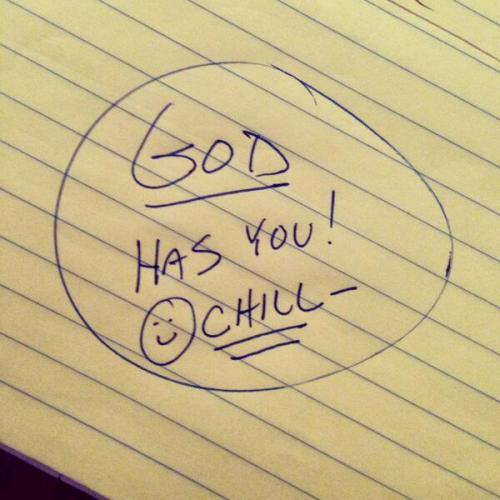 So, the next time someone has a different opinion of me, a better way of doing something, or some comment on what my next step should be - I'm going to try to listen without a quick answer, think if there is something productive there, and then consider what would best for me to reach my goals without burning out before I do. Better yet, some prayer would be helpful in these situations. Sometimes the "I did it my way," steps that we take are not the best. People can have some pretty crazy needs and we can see this with the divorce rate and ridiculous spending to the point of bankruptcy on cars and houses that we can't afford, but think we deserve. God's plan is even better than the one you have for yourself.
 There are a lot of people in this country who only stop when they are asleep. Is this the life that they really wanted to live, the life that they would've chosen for themselves? When they were kids did they ever think that they would so value the opinion of someone that has "authority" over them and value money so much that they would sell their souls? I doubt that many of us fantasized about being worked to the bone, retire with a modest amount of money, and die in a nursing home. All that work, but in 50 years few will know you even existed? Why live by the opinions of what others think you should do if that's the final outcome? It happens everyday, work at a job you hate, retire, and die without even trying to pursue something you were passionate about. My dad always wanted to be a history teacher and a cartoonist. It never happened because he found a good paying job that he became stuck in. He didn't enjoy his job, but they paid just well enough that it kept him from pursuing his real passions. He got his degree to teach history, and the company he was with just paid him a little more to keep him there. I can't say that I wouldn't do the same thing. We never wanted for anything, but I'm sure there are a lot of "what ifs?" floating around in his head. He was very gifted artistically. He might have made more money in the long run doing that? He's passionate about history. Maybe he could have written something? Better to have tried and failed than to regret not trying. Not to say he's a miserable person, but I'm sure the way things turned out wasn't his dream.
There are people out there that love their jobs. It's not something that is beyond reach. Yes, society needs garbage men and janitors, but it needs garbage men and janitors that enjoy what they do. If you're doing something that is making you miserable because that is what is expected by the other people in your little world, then you will be on your deathbed looking back at a lot of meaningless and wasted time.
There are going to be people in all walks of life that are going to be competitive with you. If you're the new guy with a company, there will be those that will want to see you succeed and there will be those that want to see you fail. The ones that want to see you fail are usually not having these thoughts because they don't like you, it's usually because they're simply selfish and want to be at the top of the ladder. If they see you succeed, you are an obstacle in their way. If it works out that you are doing something better than they can, or you're working harder than they do, then they will find ways to throw you under the bus when something goes wrong or try to get others to think negatively of you. This selfishness will usually come back to bite them, but in the off-chance that it doesn't these are the kind of people at the top of the ladder that when they are finally fired, everyone goes out for drinks and has a good laugh. Dealing with these types can be difficult, but if we stoop to their level we're no better than they are. I know it's very tempting, but we have to try to stay out of the office politics and gossip as much as possible. People notice this. If they don't like trait you have, they're trouble. If they appreciate it, then you've gained respect. Either way, it doesn't matter what others think - staying out of these petty conflicts and backstabbing will make you happier and less stressed in the long run.
The constant need for approval, trying to impress, and worrying about what others think of you is a mental prison that can make you feel like you are in a physical one. Sometimes we think of worse case scenarios and it usually does involve some type of rejection. It's a hard habit to break. When you surrender to being yourself regardless and let the chips fall where they may you'll notice your fear of what people think is diminished. Each day that we spend being miserable with our circumstances, there is someone else out there, who with a lot of prayer and thought, has come to a place in their lives where they are exactly where they're supposed to be. They get up every morning and it feels like a Saturday. This is hard for me to imagine right now, but to know that it is possible triggers thoughts that take me out of my mental prison and makes me want to be braver, more apt to take chances towards a goal, and more reliant on the fact that God has a plan that always works out for the best, no matter what it seems like right now or what roadblocks I may face in the future.
Subscribe to:
Posts (Atom)